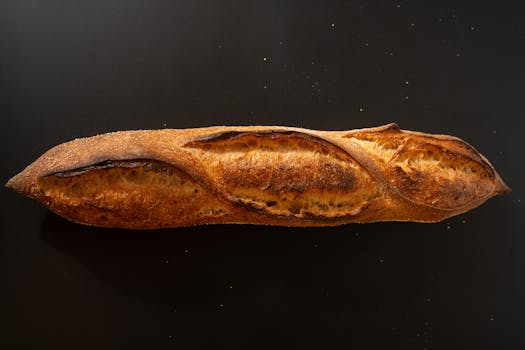
If you’ve ever bitten into a baguette and marveled at its delicate crunch, you’re in the right place. That sought-after crisp crust and open, airy interior are hallmarks of sourdough baguettes crafted with wild fermentation.
Rarely does a bread spark as much excitement among home bakers as these slender loaves. They’re more than bread—they’re a personal quest for both flavor and technical achievement thanks to wild-fermented sourdough.
Stick around to discover the actionable steps, guiding principles, and specific rituals that turn ordinary dough into truly remarkable sourdough baguettes with a crisp crust and ethereal crumb.
Wild Starter’s Role in Achieving an Airy Baguette
The wild starter sets the foundation for everything that follows. A lively, balanced culture helps sourdough baguettes rise high and form pockets of air inside the crumb.
By feeding the starter consistently and keeping it at optimal warmth, a baker can ensure robust fermentation. This naturally encourages a lacy, open crumb and nuanced flavors.
Establishing Fermentative Strength
A mature starter bubbles robustly and has a balanced aroma—slightly tangy with hints of overripe fruit. Bakers learn to recognize this by observing rise and sniffing for freshness daily.
When the starter doubles predictably after feeding and looks full of tiny bubbles, that’s a sign it’s ready for use. An underdeveloped starter results in a denser, heavier crumb.
Sourdough baguettes thrive on fermentation strength. Every time the starter feels billowy and smells bright, it provides the right lift for a beautifully “holey” loaf.
Timing Feeds for Optimum Fermentation
Daily feeding offers rhythmic predictability. If your starter peaks in 4-6 hours, adjust schedules so the dough starts fermenting just as the starter hits its maximum activity.
A baker may say, “I feed at lunch so my starter peaks by dinner.” That approach ensures predictable leavening, resulting in baguettes with excellent oven spring and an airy interior.
Use this timing consistently. Underfed starters produce sluggish dough, while overfed cultures lack sufficient acidity—timed feeding keeps the flavor and structure balanced every bake.
| Starter Condition | Rise Time | Aroma | What to Do Next |
|---|---|---|---|
| Peaked & Bubbly | 4-6 hours | Fresh, slightly tangy | Use in dough immediately |
| Flat & Runny | 6+ hours | Sour, strong | Feed again before use |
| Barely risen | 8+ hours | Mild, bland | Feed, ferment longer |
| Collapsed | 2-4 hours | Sharp vinegar | Refresh and discard excess |
| Active & Elastic | 5 hours | Sweet, fruity | Ready for baguette mixing |
Mixing and Folding for a Light, Elastic Dough
By following a careful mix and fold routine, bakers develop the dough without overworking it. This method creates extensible gluten for sourdough baguettes with a chewy, tender bite.
A gentle hand, using the stretch-and-fold technique, traps gases while keeping gluten supple. This process mirrors how one might ease bread dough into shape without breaking its inner scaffolding.
Implementing the Stretch-and-Fold Sequence
Practice a specific pattern: mix the dough, rest for 30 minutes, stretch up a side, fold over, then repeat from each direction. Complete four rounds at 30-minute intervals for best effect.
- Start with a rough mix: combine flour, water, starter, and salt, blending by hand until fully hydrated.
- Let the dough rest for 30 minutes before beginning folding; this autolyse phase aids gluten formation for structure.
- Gently stretch one side upward, fold over the center, and rotate the bowl. This move builds layered strength.
- Repeat this process once every 30 minutes, completing four total rounds for reliable strength and extensibility.
- Check for windowpane: pull a dough bit between fingers. If semi-transparent, gluten is well-developed for sourdough baguettes.
This sequence preserves dough gas, guaranteeing airy baguettes with crisp edges. With regularity, each batch approaches that chef-level crumb, marked by irregular holes and structure.
Supporting Gluten Development Without Kneading
Use wet hands to handle dough, gently coaxing it rather than tearing. Smooth dough edges mean gluten strands are holding together.
- Embrace patience over force; allow dough to relax between rounds for extensibility and strength.
- Fold only just enough to layer strength without risking breakup of internal bubbles that make sourdough baguettes so light.
- Avoid flour on hands after the initial mix—it dries out the surface, causing an uneven crust.
- Inspect after each fold for even bubble distribution, adjusting future folds to correct tight or gasless areas.
- End folding when dough becomes puffy, slightly resistive, and stays in a dome shape after resting.
By supporting natural structure, bakers achieve a baguette with a crumb nearly as lacy as a French patisserie counterpart, made all the more special by wild fermentation.
Shaping and Scoring for Maximum Oven Spring
A well-shaped and precisely scored baguette expands noticeably in the oven. Each step in shaping ensures internal gas isn’t lost, setting up for an airy and visually stunning result.
Professional bakers roll dough tightly, pinching seams closed. At home, follow these steps and your sourdough baguettes will better hold shape and open perfectly upon baking.
Creating a Taut Surface for Structure
Begin by lightly flouring a work surface, then pat dough gently. Press from the center outward, forming a rough rectangle and degassing minimally to retain air within the dough.
Roll the dough from the short end, tightening with each turn. Pinch the seam together, flip it seam side down, and rest briefly for easier final shaping.
Once rested, elongate the dough by pushing from center to ends with both hands, applying gentle even pressure. This elongation readies the dough for proper expansion when scoring and baking.
Making Clean, Confident Scores
Score with a sharp blade or lame at a low angle, making three to five overlapping diagonal cuts for classic sourdough baguettes. Each cut should be swift and bold for maximum rise.
Proper scoring guides oven spring, directing the dough upward instead of out. Many bakers mutter, “one clean motion,” teaching their hands to slice without hesitation every bake.
If the blade drags or rips, pause to clean and try again. Sometimes, a slight wrist flick perfects the motion, giving those ears and ridges baguette fans admire.
Baking for a Crisp Crust and Creamy Interior
Cranking the oven to maximum and introducing steam ignite dramatic oven spring. For sourdough baguettes, this intense heat helps form a caramelized, deep-brown crust and keeps the inside delicate.
Bake directly on a preheated stone or steel for professional results. The radiant heat jump-starts crust development, allowing air pockets to set and crumb to gel without drying out.
Utilizing Steam for Optimal Results
Fill a tray with boiling water or toss ice cubes onto a preheated pan in the oven’s base. Steam envelops the loaves, slowing crust formation and enabling the baguettes to rise tall first.
A cloud of steam also enhances color and blistering. In a home kitchen, even small bursts of moisture make a difference, adding distinctive shine and craggy crackle all over the crust.
Vent steam after 10-12 minutes by briefly opening the oven. The crust then sets crisp, while the insides stay soft and springy, thanks to sourdough fermentation’s steady gas release.
Lifting, Cooling, and Slicing Techniques
Use a peel or thin board to lift loaves immediately to a rack so air circulates underneath. This prevents sogginess from trapped steam, keeping the crust audibly crisp.
Resist slicing too soon. Wait until the residual steam escapes, about 30-40 minutes, before cutting. This keeps the crumb creamy instead of gummy, with distinctive see-through holes.
Slice using a serrated bread knife in long, gentle motions. Enjoy the fully developed crust and pillowy crumb of wild-fermented sourdough baguettes while they’re freshest.
Troubleshooting Your Sourdough Baguettes Step by Step
When a bake veers off course, targeted fixes get results fast. Each observable clue has a practical action, ensuring your next batch of sourdough baguettes comes out closer to bakery quality.
Act on these signals right away. For instance, if a baguette is flat, adjust fermentation or proofing times next round, or tweak shaping pressure for a tighter, livelier loaf.
| Problem | Appearance | Likely Cause | Next Step |
|---|---|---|---|
| Dense crumb | Tight, few holes | Under-fermented | Extend bulk fermentation by 30-60 minutes |
| Flat loaf | Wide, low rise | Over-proofed or weak shaping | Shape tighter, reduce final proof time |
| Thick crust | Dark, tough | Low steam or high oven temp | Add steam; lower temp slightly |
| Gummy crumb | Sticky inside | Sliced too soon | Cool baguettes fully before slicing |
| Collapsed ear | Flat scoring ridge | Shallow or slow scoring | Score deeper and cut briskly |
Enhancing Flavor Nuance and Aroma in Wild Baguettes
Manipulate fermentation time and temperature for new subtleties in your sourdough baguettes. A slightly extended cool fermentation amplifies nutty, fruity notes, bringing the dough to life even more robustly.
Diversify your flour selection. A touch of whole wheat or rye in the blend nudges baguette aroma toward roasted grain and complements the natural tang of wild sourdough starter.
Infusing Baguettes with Distinct Personality
Add-ins like black sesame, chopped nuts, or malt syrup offer both beauty and flavor layering. Fold in small amounts right before final shaping for evenly distributed bursts in each slice.
Use scent cues to decide readiness: when a proofed baguette smells slightly sweet, it’s usually ready to bake. Sharper aromas point to over-fermentation— refrigerate or bake immediately.
Every adaptation offers learning. Record your recipe tweaks in a simple notebook so you can repeat delightful surprises with confidence in future sourdough baguette bakes.
Pairings and Serving for the Ultimate Experience
Crisp wild-fermented baguettes deserve just-picked accompaniments. Serve torn pieces with salted butter, tangy cheeses, or summery tomatoes brushed with oil for a flavor collage that celebrates the crusty loaf.
Bring a similar energy to the table as you would for a picnic or quick snack platter. Cut the baguette into thick rounds for dipping in vinaigrettes or herbed spreads.
Share and savor your handiwork. Each time, invite a conversation on wild fermentation’s impact, and trade bite for bite with bakers and bread lovers alike.
Making Sourdough Baguettes a Part of Your Bread Routine
Building habits around sourdough baguettes brings rhythm and reward. Plan your schedule for feeding, mixing, folding, and baking so you can enjoy fresh loaves without stress or interruption.
Bake batches ahead and freeze some for later. To re-crisp the crust, mist the thawed baguette with water and reheat in a very hot oven for just five minutes, reviving its signature texture easily.
Create a ritual for eating fresh baguettes, maybe as a Friday treat or shared centerpiece for family meals. This gives meaning to the process and strengthens your bond with sourdough and home baking.
Frequently Asked Questions
What is wild fermentation and why is it crucial for sourdough baguettes?
Wild fermentation uses natural yeast and bacteria present in flour and the environment, creating more complex flavors and textures. This process helps sourdough baguettes develop depth, aroma, and that classic tang that packaged yeast can’t match.
How do I know if my starter is strong enough?
A robust wild starter should double within six hours of feeding, smell gently tangy, and show many surface bubbles. Use the ‘float test’—drop a teaspoon into water; if it floats, it’s ready for sourdough baguettes.
Why is my baguette dense instead of airy?
A dense baguette usually signals underfermentation or incomplete gluten development. Try extending the fermentation or increasing folding rounds. Make sure your starter is active and bubbly before mixing your dough.
How much steam should I use when baking?
If you’re using a home oven, a cup of boiling water in a preheated pan or several ice cubes tossed in will work. More steam in the first 10 minutes results in a thinner, crackly crust and better oven spring for your sourdough baguettes.
Can I substitute other types of flour?
You can experiment with bread flour, all-purpose, or a blend with small amounts of whole wheat or rye. Each will affect the texture and flavor, so start with small variations and taste the results to perfect your sourdough baguettes.