The first bite of a freshly baked, wild fermented bagel sets the bar for breakfast expectations. That signature chew, underpinned by tangy complexity, keeps home bakers experimenting. It’s no wonder more people discover sourdough bagels as their go-to item for morning routines and creative kitchen projects.
While basic bagels fill a need, wild fermentation unlocks a distinctive aroma and flavor depth absent from commercial doughs. With every batch, you learn that sourdough bagels reveal an engaging blend of texture, taste, and hands-on science. It’s a ritual with practical and sensory rewards.
If you’re curious about the difference wild fermentation brings—or ready to refine your technique for ideal chew—this article explores key rules, handy tools, and nuanced steps. Let’s roll up our sleeves and create sourdough bagels that combine time-honored texture with homey joy.
Finding the Ideal Chew: Why Wild Fermented Bagels Shine
Securing that authentic, semi-dense bite takes more than a basic recipe. Here you’ll see precisely why wild fermentation produces top-tier sourdough bagels every time, starting with the starter itself.
Wild yeast and lactic acid bacteria drive this dough’s signature sourness and subtle, complex crumb. The difference turns up with each slice, bite, and sniff, transforming a simple roll into a sensory highlight.
Starter Dynamics That Matter
Activating your wild starter before mixing guarantees robust yeast activity. Look for doubled, bubbly starter with a sweet-acidic scent—signs it’ll deliver the lift sourdough bagels demand.
If you maintain your starter in the fridge, allow several room-temperature feedings prior to baking. This refresh primes it for maximum strength and flavor, resulting in that classic tang.
Bagel dough with slightly lower hydration than sourdough bread yields dense crumb. Unlike airy loaves, this elasticity lets you form, boil, and bake sturdy rings—true to tradition every time.
Fermentation Timing and Flavor Control
Bulk fermentation at 72–75°F develops characteristic acidity and chew. Aim for 4–6 hours until dough looks slightly puffed; overproofing softens tension and dulls structure—watch for sluggish rise to avoid this.
A cool overnight retard, shaped and refrigerated, produces pronounced complexity and easier shaping. When pressed gently, well-fermented dough springs back but retains a fingerprint indent on the surface.
Moving directly from cold-proof to boiling water, you preserve shape, shine, and crust snap. This transition boosts contrast between the chewy exterior and the open but compact interior crumb.
| Step | What to Watch For | Why It Matters | Takeaway |
|---|---|---|---|
| Feeding Starter | Doubling, bubbles, creamy scent | Guarantees reliable rise | Feed two days before baking |
| Mix Dough | Shaggy but cohesive | Prevents overhydration | Keep hydration ~60% |
| Bulk Ferment | Puffed, not doubled | Balances structure and flavor | Check after 4 hours |
| Cold Shape/Proof | Springy, tacky | Aligns flavor and texture | Overnight chill |
| Boil and Bake | Glossy skins, set rings | Ensures chewiness | Boil just 1–2 minutes per side |
Shaping and Handling: Get Consistent Results Every Batch
Consistent handling ensures every sourdough bagel has the iconic round shape and chewy crust. Here’s how to keep your dough pieces uniform and workable at every step in your kitchen.
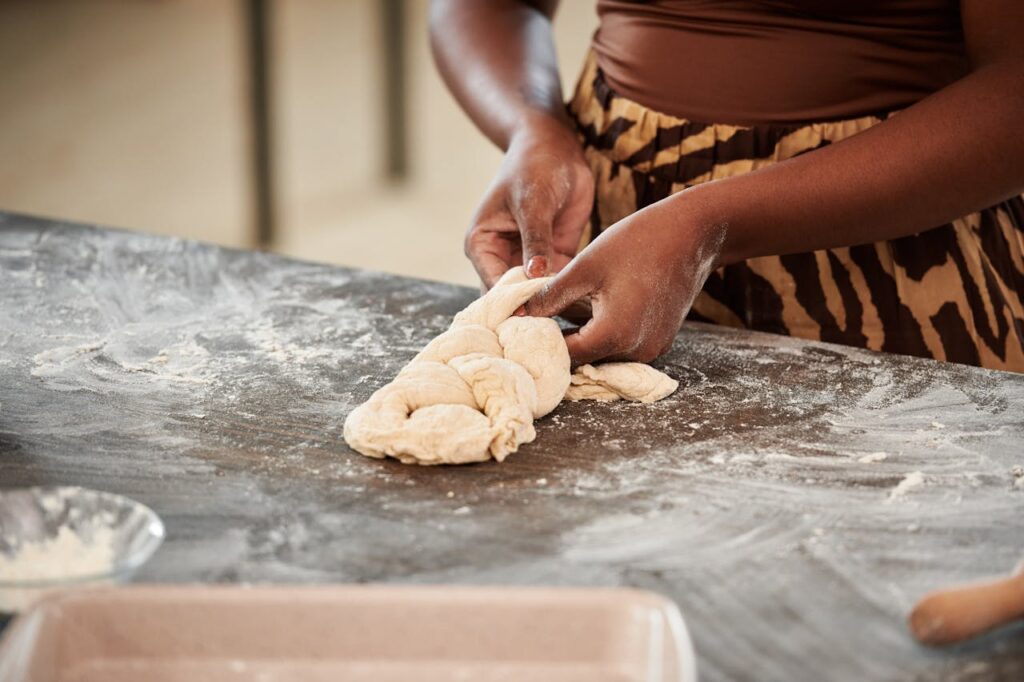
Use a digital scale to portion each dough piece—90 to 100 grams is ideal. Shape by rolling each ball into a rope, then overlap the ends firmly for a sturdy seam. This trick guards against splitting in the boil.
Dividing for Equal Cooking
Precise weighing prepares bagels that cook at the same speed. Gather your dough into a log, slice equal segments, and weigh each one individually on a scale. Adjust until weights match for even baking.
- Weigh each dough piece: Reduces guesswork and ensures consistent size for even rising and boiling.
- Roll tight ropes: Builds gluten strength so each bagel keeps its shape during cooking and baking.
- Seal ends with care: Prevents the bagels from unraveling during the boil, protecting that characteristically chewy ring.
- Rest after shaping: A brief bench rest helps relax the dough, making the final bagel ring shape easier to achieve and less prone to tearing.
- Cover dough during shaping: Guards against surface drying for a silky, workable texture throughout the process.
Careful shaping and scaling help every sourdough bagel reach its full chewy, glossy potential right out of the oven. Small actions add up to bakery-worthy results in your home kitchen.
Maintaining Structure During the Boil
Keep water at a gentle simmer, not a rolling boil—too violent and bagels lose their structure. Lower bagels gently and avoid crowding the pot, which can lead to misshapen results and uneven crusts.
- Simmer instead of boiling vigorously: Gentle temperature control promotes smooth crusts without tearing delicate dough.
- Flip bagels midpoint: Ensures symmetric cooking on both sides, critical for consistent chew and interior crumb.
- Use a slotted spoon: Transfers bagels with minimal handling, keeping their round forms intact while removing them from boiling water.
- Sprinkle with toppings quickly: Seeds adhere better when the surface is wet; do this right out of the pot before baking.
- Line your baking sheet: Use parchment or a silicone mat to prevent sticking and guarantee even oven spring with a clean release.
A well-managed boil and careful post-boil handling create bagels that look as remarkable as they taste. The detail in these moments decides the final texture in each chewy, shiny ring.
Balancing Flavor: Adjusting Sourness and Sweetness
Small tweaks in fermentation, feedings, and ingredients decide whether your sourdough bagels lean tangy, mellow, or sweet. Adjust starter maturity, ferment time, and even malt or honey to suit your favorite balance.
For those who crave a pronounced tang, feed your starter with whole grain flour and extend cold fermentation. For a subtler flavor, use young starter and minimize refrigerator time—the difference is clear in every bite.
Integrating Malt and Natural Sweeteners
Adding malt syrup or honey to your bagel dough and boiling water deepens caramel notes and aids browning. This step enhances crust shine and a gentle sweetness, balancing the sourness from wild fermentation.
Mix 1–2 tablespoons of barley malt syrup or honey into your dough as you combine flour and water. Add an extra scoop to boiling water before poaching the rings. This creates bagels with attractive color and nuanced taste without masking tang.
Instead of cane sugar, use natural sweeteners for reliable oven spring. Their slow-reacting sugars work hand-in-hand with wild yeast activity—no need to worry about unbalanced flavors or weak rise.
Garnishing for Extra Crunch and Depth
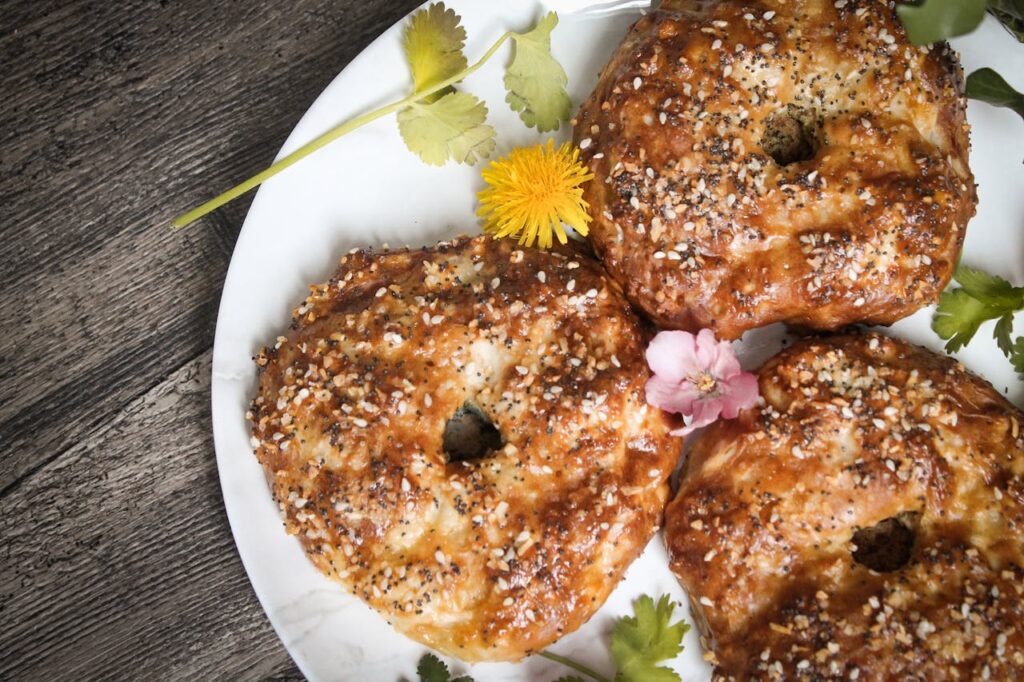
Poppy, sesame, or everything seasoning clings best to wet bagels just after boiling. For a real flavor pop, combine seeds and flakes: press them lightly so they fuse during baking, lending crunch to every mouthful.
If you crave assertiveness, use toasted garlic or onion alongside seeds—these toppings shine next to robust sourdough flavor. Popular bagel shops pile on bold mixes, and you can, too, right from your kitchen counter.
Finishing with flaky salt heightens crust snap and contrasts sharp tang. Sprinkle a barely-there pinch before the tray hits the oven—the result is an addictive, bakery-style exterior you’ll want to recreate often.
Flavor Pairings and Creative Toppings for Home Bagel Bakers
Combining fresh spreads, smoked fish, and pickled vegetables turns sourdough bagels into the centerpiece of a memorable meal. Well-matched toppings bring out the tang and chewy depth you’ve achieved through wild fermentation.
Pairing classic lox with herbed cream cheese lets vibrant acidity and smooth richness mingle on a golden, crackly bagel. For vegetarian options, try whipped feta or citrusy avocado mash for a lively brunch spread.
Cream Cheese Pairings for Every Palate
Fresh dill, cracked pepper, and lemon zest turn basic cream cheese into a restaurant-quality spread. Stir these in and swipe generously—that’s the easiest win for bagel fans wanting a bolder dairy hit.
Roasted garlic, chives, or finely chopped pickles fold into cream cheese just as smoothly. Slightly chunky, herbed spreads carry tang from wild fermentation into each bite, building a flavor bridge for every crumb.
For a vegan take, blend soaked cashews, lemon, herbs, and salt for a dairy-free spread. This matches bagel chew with rich, plant-based creaminess that won’t overwhelm your sourdough’s natural tartness.
Side Dishes and Additions
Sliced cucumbers or thinly shaved radishes stacked on top balance richness, sharpening the bagel’s sour notes. Olive tapenade or marinated artichokes elevate even plainer sourdough bagels to meal status in a few seconds.
Consider an open-faced breakfast with softly scrambled eggs, fresh tomatoes, and smoked salt for more protein and contrast. Color, crunch, and tang come together for a memorable weekend treat.
Finish your plate with a citrus salad or berries on the side. Their brightness clears the palate between bites, letting you savor each texture from the wild fermented crumb to every topping.
Beginner Troubleshooting: Solving Common Sourdough Bagel Issues
Running into dense crumb, splitting, or bland flavor? These fixes will raise your sourdough bagels game. Each one is a direct, actionable tip drawn from common home baking hurdles and realistic learning curves.
If your results disappoint, shift just one variable at a time before the next batch. This approach pinpoints real solutions and keeps improvement clear, concrete, and stress-free, even for new bakers.
Tackling Dense or Dry Results
Dry bagels signal underfermented dough or too low hydration. Increase bulk ferment time by 30–60 minutes and add 5% more water at mixing to adjust.
Consider the feel: properly mixed dough feels elastic, tacky but not sticky. Overworking leads to toughness, so knead by hand only until smooth.
If you notice a hard crust, boil for 90 seconds instead of 2 minutes to soften the surface and create a gentler chew aligned with bakery favorites.
Preventing Flat or Misshapen Rings
If bagels lose shape when boiled, two causes are likely: weak gluten development or dough too warm at shaping. Chill shaped rings 10–15 minutes before boiling for better structure retention.
Try a windowpane test after kneading: stretch a pinch of dough thin without tearing. If it holds, gluten is ready. This boosts oven spring and keeps rings plump in the final bake.
Handle boiled bagels with care—use a slotted spoon and transfer gently to your baking surface. Every extra touch risks deflating precious air pockets plus disturbs the glossy crust.
Conclusion: Sourdough Bagels as a Daily Ritual
Sourdough bagels deliver a distinctive experience: chewy, tangy, and deeply rewarding with every bake. Their wild fermentation roots offer complexity traditional methods can’t match, making every finished batch a project to savor and share.
Refining fermentation, shaping, and handling turns a simple dough into breakfast art. Even small adjustments can redefine your results, helping you build personal tradition with sourdough bagels at its heart.
Let curiosity and creativity guide your bagel journey. Wild fermented dough responds to each tweak, so every attempt brings you closer to your ideal flavor, texture, and ritual. Fresh sourdough bagels can greet your table tomorrow.
Frequently Asked Questions
What makes sourdough bagels chewier than commercial bagels?
Wild fermentation develops strong gluten networks through slow proofing and lower hydration, creating the signature dense, elastic crumb found in chewy sourdough bagels. The boiling process also sets the crust for extra chewiness.
Can I shorten fermentation and still get good sourdough bagels?
Short fermentation (4–6 hours at warm room temperature) gives mild tang but less complexity. For maximum flavor, include an overnight cold proof to intensify sour notes and crust color without risking over fermentation.
How do I know my starter is ready to use?
A ripe starter rises to double, bubbles actively, and smells pleasantly sweet-acidic. Drop a spoonful in water—if it floats, it’s airy enough for reliable rising in sourdough bagels.
Can I freeze sourdough bagels after baking?
Yes. Cool bagels completely, slice if desired, then freeze in airtight bags. To serve, thaw at room temperature or reheat directly from the freezer, which preserves the chewy texture and wild fermentation flavor.
Why did my bagels deflate after boiling?
This usually comes from overproofing or rough handling. Chill the shaped dough before boiling, handle gently, and limit boiling to 1–2 minutes per side for stable, round bagels with a resilient crumb.