Picture a kitchen warmed by fresh sourdough, the rustic aroma promising flavor and tradition. Amid this charm, natural preservatives born from fermentation work behind the scenes. Their power keeps bread fresh well beyond what’s common in most leavened loaves.
This matters for anyone hoping to cut artificial additives without trading convenience. Natural preservatives produced in wild fermentation sourdough safeguard shelf life and taste, providing a model for better homemade and artisanal bread.
Curious how wild fermentation achieves this? Dive in to discover the exact substances and methods that transform basic dough into a resilient, flavorful, and naturally preserved staple for your home table.
Wild Sourdough’s Microbial Chemistry Creates Reliable Natural Preservatives
Gaining the benefit of longer shelf life starts with wild fermentation’s unique blend of yeast and lactic acid bacteria. These microbes produce natural acids and metabolites that make bread last longer and resist spoilage.
Unlike store bread, where chemicals extend freshness, sourdough’s natural preservatives are a direct result of microbial teamwork. These organisms lower pH and create antibacterial compounds while developing complex flavors every baker craves.
Lactic Acid Bacteria at Work: Flavor Meets Preservation
Lactic acid bacteria thrive in wild sourdough, producing lactic and acetic acids throughout fermentation. They boost acidity without aggressive sourness if kept in balance, and they naturally inhibit mold and pathogenic bacteria.
Bakers can spot success when the crumb stays moist and springy, flavor deepens after baking, and the loaf remains fresh for several days. These outcomes signal optimal production of natural preservatives.
For example, feeding your sourdough starter regularly keeps the right microbial population ready. A simple phrase to remember is, “Feed twice daily, get steady acid and flavor in return.”
Wild Yeast Gives Bread a Leg Up on Spoilage
Active wild yeast not only leavens the dough but produces alcohols and esters. These volatile compounds, in modest but effective amounts, discourage spoilage yeasts and molds from taking hold in your finished loaf.
When bakers resist over-sterilizing their dough environment, native yeasts thrive. This careful balance means mature starters add additional natural preservatives, creating a system of mutual support between yeast and bacteria.
If you want to maintain this effect, save a portion of your mature starter and refrigerate at peak activity: “Jar after bubble, not after collapse,” reminds even seasoned home bakers of best practice.
| Microbe Type | Main Byproduct | Preservative Effect | Baking Takeaway |
|---|---|---|---|
| Lactic Acid Bacteria | Lactic/Acetic Acid | Lowers pH; inhibits mold | Longer crumb freshness |
| Wild Yeast | Alcohol/Ester | Reduces spoilage yeast | Slower staling |
| Propionibacteria | Propionic Acid | Enhances mold resistance | Artisanal loaves stay edible longer |
| Pediococcus | Diacetyl | Boosts anti-bacterial action | Crumb remains savory |
| Saccharomyces Exiguus | CO2/Alcohol | Infuses additional natural preservatives | Open crumb; slow spoilage |
Baking Steps That Maximize the Natural Preservative Effect in Wild Sourdough
Executing the right sequence during mixing, bulk fermentation, and baking amplifies preservative potential. Controlled temperature and hydration lock in acidity, so each step preserves the loaf with natural preservatives created along the way.
Skipping shortcuts, sticking to tradition, and embracing time-honored routines means every loaf benefits from robust anti-spoilage action formed by the wild microbes.
Enhancing Dough Qualities Through Observable Steps
See a sticky, extensible dough? That signals healthy fermentation. Look for small, regular bubbles and a mild tang—indications that lactic acid bacteria and wild yeasts are actively forming natural preservatives with every rise and fold.
- Ferment at 75°F for steady acid production (too warm may favor yeast alone, limiting preservative effect).
- Mix in whole grains to provide minerals that support fermentation and thus boost preservative output.
- Use gentle stretch-and-fold techniques to keep gas in the dough, preserving antimicrobial byproducts.
- Proof in the fridge overnight to deepen acid development, extending shelf life through slow creation of natural preservatives.
- Slash the dough properly before baking; this signals complete fermentation and readiness for the oven’s heat to lock in preservation benefits.
Following these intentional steps means bakers get bread that’s fragrant, resilient, and stays fresh without artificial additives—every slice showcases the real benefits of natural preservatives.
Signs of Preservative-Rich Fermentation
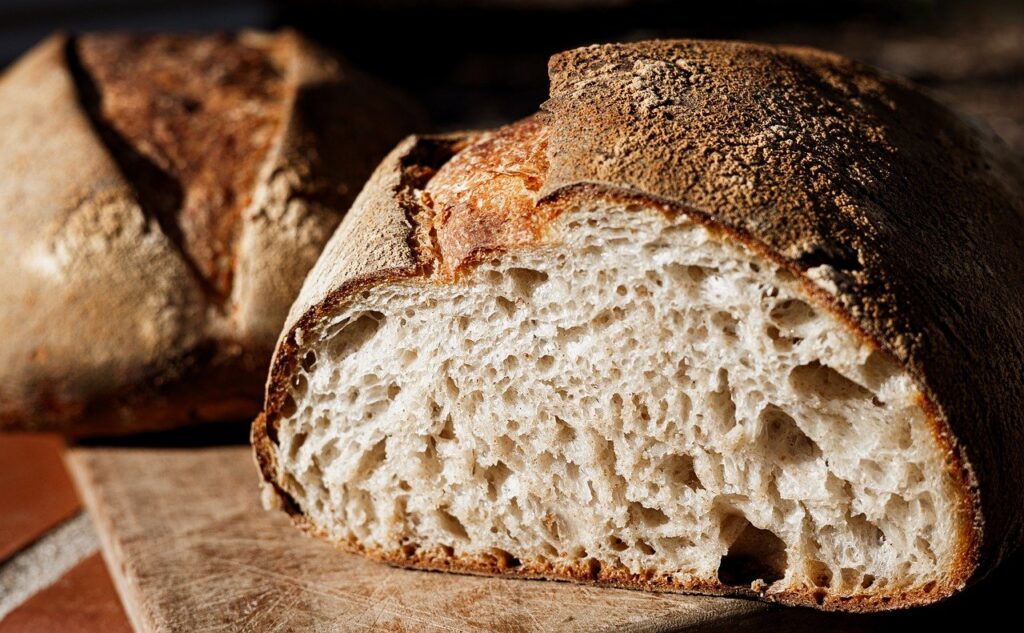
A golden, blistered crust and tender crumb suggest high levels of fermentation-derived natural preservatives. Cool the loaf fully, then test its keeping quality by storing it at room temperature—true wild sourdough resists staling and mold for days.
- Store in a paper bag or bread box for ideal airflow—plastic can trap moisture and tempt spoilage.
- Bake loaves to an internal temperature of at least 200°F to ensure all preservative systems activate fully.
- Listen for a crisp crackle from the crust as the bread cools; it denotes moisture retention laced with natural preservatives.
- Re-slice only what you plan to eat; minimizing air exposure preserves internal moisture and acid balance.
- If freezing, wrap tightly after complete cooling. Thaw on the counter to help preserve texture and flavor.
With these tangible steps, anyone can recognize, deploy, and verify the preservative power developed inside every wild sourdough loaf.
Interactions Between Preservative Compounds and Dough Structure Define Longevity
The combined action of acids, alcohols, and esters affects texture as well as shelf life. Bread’s interior stays appealing because natural preservatives manage moisture and staling from within.
Traditional sourdough methods let these preservative interactions unfold in real time, never relying on synthetic mold inhibitors or stabilizers. It’s a self-sustaining model tested through centuries of baking.
Acidic Compounds Support the Gluten Matrix’s Strength
Lactic and acetic acids lower dough pH, helping enzymes break down gluten just enough for a supple crumb. These acids not only slow spoilage but also create the signature chew of wild-fermented bread.
Bakers can observe the dough’s extensibility during shaping—the right balance of acid ensures a strong but flexible gluten web, working in tandem with preservative power.
A handy visual: dough that stretches without tearing and springs lightly under gentle pressure is holding both structure and natural preservatives in place for extended freshness.
Alcohol and Ester Production Regulate Aroma and Slow Down Mold
Alcohols and esters produced by wild yeast are responsible for the bread’s nuanced flavor—but they’re also quietly laying down a defense against spoilage fungi and bacteria.
Cutting into a loaf reveals a scent that should be clean, fruity, and mildly tangy. This aroma signals the presence of natural preservatives working alongside acids to keep the loaf safe longer.
To keep this synergy intact, home bakers can refresh their starter on a regular schedule. “Morning and evening, just a scoop,” is advice that ensures those key byproducts stay active.
Sourdough’s Naturally Preserved Character Is Built Through Intentional Fermentation
Every naturally preserved wild sourdough loaf is the end result of intentional, time-tested steps. Following precise fermentation routines, bakers harness a spectrum of acids, esters, and alcohols to protect and flavor their bread naturally.
This combination means you enjoy bread that tastes complex, stays fresh without additives, and resists mold longer simply by respecting microbial routines. It’s an approach that puts control—and real nourishment—directly in your hands.
By understanding and applying these methods, anyone can create, slice, and savor true wild sourdough: a loaf that’s as sustainable and resilient as it is satisfying—one where every bite celebrates the quiet power of natural preservatives.
Frequently Asked Questions
What are natural preservatives in wild fermented sourdough?
Natural preservatives are substances like organic acids, alcohols, and esters made by microbes during fermentation. These compounds combat mold and bacteria, helping sourdough bread remain fresh without synthetic additives.
Does wild fermentation sourdough actually last longer than store-bought bread?
Yes. Bread made with wild fermentation resists mold and staling thanks to its acidic pH and microbial-derived natural preservatives. Its moist crumb and robust crust can stay enjoyable for several days at room temperature.
How can I maximize natural preservatives in my sourdough at home?
Control temperature (prefer around 75°F), ferment the dough slowly, and use whole grains to give microbes minerals to thrive. Stretch and fold often, then proof overnight in the fridge to allow acids and alcohols to build up before baking.
Will my wild sourdough taste very sour if it has lots of natural preservatives?
Not necessarily. Proper feeding and proofing promote lactic acids for preservation, but don’t always result in overpowering sourness. Balanced microbial activity gives great flavor and preservation without extreme acidity.
Can I freeze wild-fermented sourdough without losing preservative benefits?
Absolutely. Once cooled, wrap very tightly before freezing. Thaw at room temperature to maintain both flavor and the integrity of natural preservatives developed during fermentation.